Wednesday, September 25, 2013

New! IAF article: The potential of microalgae meals in compound feeds for aquaculture

Microalgae has attracted much attention as a potential aquafeed ingredient so we thought we’d take a closer look. One of Simon Davies’ MSc Sustainable Aquaculture Systems students, Nathan Atkinson, weighs up the potential of microalgae meals in compound feeds for aquaculture.

Click to read the full article.

The potential of microalgae meals in compound feeds for aquaculture

Enhanced by Zemanta

25/09/13: Breakthourgh in octopus aquaculture; combined agriculture; Nofima's R&D course

Aquaculturists have struggled with octopus aquaculture but one company has made a breakthrough and it's all down to diet.

Mayab Molluscks, based on the Yucatan coast of Mexico have managed to successfully rear octopi from eggs.

At first, the octopi were given live feeds but the graduated onto a mix of crab and shrimp.
Read more...

The potential food security benefits of combining aquaculture with other farming is being explored by the West and Central African Council for Agricultural Research and Development (WECARD) and University of Ibadan, Nigeria.

In a pilot project, the team used poultry or pig waste to raise maggots to supplement fish feeding and using a stocked fish pond to cultivate lowland rice.

Dr Kolawole Ajani, project coordinator, University of Ibadan, told the Nigerian Tribune that, “the aims of the project include developing viable and sustainable aquaculture with rice and poultry for rural farmers; to ensure integration of livelihood, that is, poultry, piggery, rice and fish farming; to eradicate hunger among small scale farmers”.
Read more...

Nofima is collaborating with the University of Tromsø to run a course on management of R&D.

On one hand, the course aims to get the seafood companies to work more strategically with research, development and innovation. On the other hand, it aims to help develop closer contact and interaction between research, industry and funding agencies.

The target group is small and medium-sized seafood companies. The course is particularly aimed at managers, mid-level managers and others who have or are intended to have responsibility for research, development and innovation.

“The objective is to improve the companies’ ability to run their own R&D activities, and the course will also help to raise the industry’s expertise in commissioning research, so that research funding is spent on research that is even better adapted to meet the industry’s needs,” said Audun Iversen from the food research institute Nofima.
More information...
Rice grains
Rice grains (Photo credit: Wikipedia)


Enhanced by Zemanta

Novus

Novus International, Inc. creates Health through Nutrition products for livestock, pets and people.
Novus has employees working in over 90 countries, serving more than 2,500 customers worldwide. Based in St. Charles, Missouri, Novus has facilities including corporate offices, research and development laboratories and manufacturing operations in more than 35 countries, as well as smaller offices with field staff in an additional 60 countries. Click on the image to visit the Novus website.

Enhanced by Zemanta

Event: Asian Pacific Aquaculture

“Positioning for Profit" is the theme of the Asian Pacific Aquaculture Conference and Trade Show scheduled from December 10-13, 2013 in Ho Chi Minh City, Vietnam. The conference emphasizes the need for the whole industry to take a more strategic approach to expansion.

Plenary speakers 
There will be two plenary speakers who will both bring their expertise to the show.
Dr Pham Anh Tuan has been deputy director general at the Directorate of Fisheries (D-FISH) of the Ministry of Agriculture & Rural Development (MARD) in Hanoi since March 2010. Dr Pham Anh Tuan is an aquaculture expert in various fields such as Aquaculture extension, project design & management, development of aquaculture techniques suited to varying geographic and socioeconomic conditions, aquaculture extension and development as a component of integrated rural development. Dr Pham Anh Tuan has experience in freshwater species such as grass carp, Chinese carp, tilapia, etc. especially on the reproduction cycles and techniques.

Dr Pham Anh Tuan
Dr David Hughes, the second plenary speaker, is emeritus professor of Food Marketing at Imperial College London, and visiting professor at the University of Kent Business School and at the Royal Agricultural College, UK. David is a much sought-after speaker at international conferences and seminars on global food industry issues, particularly consumer trends, and is a strong proponent of building vertical alliances between key chain members in the food industry  - farmers, life science and input companies, ingredient firms, food and beverage manufacturers, retailers and food service.
 
Dr David Hughes
A range of sessions
Session titles include: husbandry environment, hatchery genetics, molluscs, IMTA, biofloc, aquaponics, lobsters, economics & management, crustacean health, seahorses, crustacean husbandry, recirculation systems, tilapia, tuna, cobia, yellowtail, pangasius, seabass, algae, sustainable development, etc.

Oyster Symposium
The 5th International Oyster Symposium is joining forces with the conference ensuring that there will be an exciting stream of oyster expertise engaging the great work done in recent years which has seen production in Northern Vietnam climb to over 7,000 mt in just a five-year period.

International exhibitors
Over 75 international exhibitors (Asia, America, Europe and Australia represented) and many more local suppliers will demonstrate their products and services at the APA13 exhibition. There are still some booths available as the organization decided to expand the trade space.
 

But that's not all...
‘Special’ organised sessions during APA13. Uni-President, the APA13 Gold sponsor is organising a special ‘disease on shrimp’ session for producers while Biomin, the APA13 Silver sponsor organises a ‘feeding for profit’ session.  Evonik sponsors the ‘Utilization of amino acids in aquaculture. Pentair sponsors the Aquaponics session. Dabomb sponsors the ‘alternative proteins of aquafeed’ session. USSEC sponsors the ‘Soy utilization in Aquaculture’ session and Pharmaq sponsors the ‘Health management’ session.

The WAS Premier sponsors Novus, Tyson and Alltech will promote their products and services at the APA13 trade show and conference. Novus sponsors the ‘finfish and shrimp nutrition’ session while Alltech the ‘lipids and functional ingredients’ session. Tyson will be the exclusive ‘President reception’ sponsor at APA13 which will be held on December 12, 2013.

There will be several workshop organised just prior to APA13. The Aquaculture Engineering Society workshop ‘Biofloc Technology’ on December 9-10, 2013 focuses on Bioflocs, Integrated Aquaculture and Disease Prevention. Many more workshops being organised by the APA13 exhibitors are on invitation only.

Some very special tours will be set up by the Vietnamese Ministry of Agriculture and Rural Development. One tour to Cat Ba and Ha Long will include a visit to the National Marine Broodstock Center and to the Ban Sen Oyster Farm. A second tour includes the visit of several fish cages while the tour to Ben Tre includes the visit of a clam and a shrimp farm and a shrimp hatchery and processing unit.

More information on www.was.org or in Vietnamese on www.vienthuysan2.org.vn
Email: apa2013ria2@hcm.fpt.vn
For trade show info: mario@marevent.com

Look out for a full preview of the event in the next issue of International Aquafeed magazine.


Enhanced by Zemanta

Tuesday, September 24, 2013

24/09/13: Salmon stress; climate change and fish farming; addressing sustainability in aquaculture

Stress might be the reason why losses is salmon aquaculture are high and why large numbers of  salmon do not return to their breeding ground to spawn, according to research by Uni Research AS.

The team researched new ways to evaluate salmon's mental robustness, their ability to learn and react to a new environment.

They found that salmon exposed to mild chronic stressors such as being transferred into new tanks can limit their ability to deal with new situations.

It's hoped that being able to identify what causes salmon stress will help improve management to 
Read more...

An increase in aquaculture and marine protected areas could help Pacific countries in the Coral Triangle adapt to climate change according to a report by the Asian Development Bank and the International Food Policy Research Institute.

The report found that domestic fish production is likely to be slow until 2050 due to climate change.

It also warns that Pacific coral triangle countries could become net importers of fish unless there are significant adaptation measures.

The findings were launched at a workshop assessing development strategies in response to climate change in Vanuatu.
Read more...

Aquaculture often comes under fire for its sustainability credentials so it is great to find an article which looks at ways the industry is addressing the issue.

This article on GreenBiz highlights five different projects or companies that are cleaning up fish farming.

They include innovative technology, new species and industry-led sustainability drive. Take a look.
Read more...

 
English: Illustration of various salmon
English: Illustration of various salmon (Photo credit: Wikipedia)


Enhanced by Zemanta

New! IAF article: Grinding equipment for aquafeeds

The first article form the September/October 2013 issue of International Aquafeed Joyce Li of Amisy, China looks at the importance of grinding equipment in aquafeed production for different fish and crustaceans.

Click to read the full article.

Grinding equipment for aquafeeds

You can also read the full issue online for free.

Norel

Norel makes a range of products for aquaculture species including pellet binders, organic acids, organic minerals and flavours. Click on the image to visit the Norel website.

Salmon farmers celebrate British Columbian aquaculture

Salmon farmers in British Columbia, Canada have been celebrating Aquaculture Awareness Week with a host of activities on Vancouver Island.

The annual event is aimed at raising awareness of the industry and also a chance to thank the thousands of hard-working men and women who make the industry a success.

“Our members work every day to contribute to their communities – and yet, there are many things people don’t know about aquaculture,” said Mary Ellen Walling, executive director, BC Salmon Farmers Association (BCSFA). “Our goal during this week each year is to focus on building the understanding and pride in one of the key drivers for rural and coastal communities in BC.”

Campbell River and Port Hardy councils have approved proclamations for Aquaculture Awareness Week September 23-27, 2013, following requests by the BCSFA. The proclamations recognise the important role that aquaculture – particularly salmon farming – plays in both communities and the BCSFA’s goal of better educating the public about their members’ operations and opportunities.

“As the public awareness aspect of Aquaculture Awareness Week has grown and changed over the years, this week has also evolved into a celebration of the contributions of those who work in our industry and the work they do to support the communities they live in,” said Walling.

“Volunteering with search and rescue, raising money for cancer research and supporting the local food bank are just some of the activities our workers are proud to take part in. Aquaculture Awareness Week affords the industry a chance to recognise those employees for that hard work and a chance to say thank-you.”
Read more...

A salmon farm which holds yearlings for up to ...
A salmon farm which holds yearlings for up to two years. Many hold broodstock for even longer in these conditions to help ensure large, sexually mature adults. (Photo credit: Wikipedia)


Enhanced by Zemanta

Monday, September 23, 2013

23/09/13: Aqua museum for Kerela; opposition to New Zealand geoduck farm; dam fish farming in Eritrea

Mala in Kerala, India is to get an aqua museum.

Set up by the Agency for Development of Aquaculture, Kerala (ADAK), the museum will serve as a educational facility as well a tourist attraction.

The project aims to develop the Poyya Fish Farm into a model traditional fishing village, which will provide an overview of the significant aspects of inland fisheries.

Plans for a geoduck farm off Nelson Island, New Zealand have received strong opposition from existing coastal users.

The Sunshine Coast Regional District (SCRD) has asked for one of Emerald Sea Farms to find “a different remote location” for its shellfish farm. 

Emerald Sea Farms has reapplied for two sites on the island for geoduck farming, with one of the sites fronting the SCRD’s Harry Roberts Park.

SCRD believe that the proposed site will interfere with boat traffic and the area's potential as a forage fish spawning ground.

Fish farming in the dams of at Gash-Barka region, Eritrea is going well according to Dejen Foto, head of fish farming in the Marine Resources Ministry.

Fish farming at the dams of Gerset, Fanko-Rawi, Fanko-Tsimu'e and Bademit uses water cumulated in the dams for fish farming in addition to irrigation for farming.

English: Fish Farming at Miabhaig These shelte...
English: Fish Farming at Miabhaig These sheltered waters lend themselves to fish farming. The houses in the distance are at Uigen. (Photo credit: Wikipedia)


Enhanced by Zemanta

Friday, September 20, 2013

20/9/13: Dengue-eliminating fish; illicit fish farms; Trinidad aquaculture investment

Fish have been enlisted by the Punjab government in an unlikely new front of India’s war on dengue fever.

Authorities believe that fish from the Rawal Dam hatchery can solve the rising number of cases in Rawalpindi without the use of anti-mosquito chemicals. They’ve been released into ponds and fountains in the hope that they eat larvae from the mosquitoes that carry the virus.


Feed residue from illicit fish farms is threatening the operation of a power station near Manila, reports Philippines news organ The Inquirer.

The coal-fired plant, largest in the Philippines, says fish feed is entering its water intake and jeopardizing the area’s electricity supply. Agricultural authorities say fish farmers should keep their cages 400m away from the plant perimeter at all times, but currently many are at a quarter of that distance.

In 2008-9 the plant was forced to shut down after typhoon damage allowed fish to escape their cages and swim into the cooling system.


Aquaculture in Trinidad and Tobago will receive a boost after its government announced a $3.6m investment in the industry.

The money will be spent on new farms and technology, as well as research and training for the fish farmers of the Caribbean islands. Food Production Minister Devant Maharaj hopes the investment bring some commercial clout to aquaculture in his country.

“Approximately 75 per cent of fish farmers can be considered to be subsistence or backyard farmers who, for a number of reasons, are unable to achieve economies of scale and hence commercial and economic viability,” said Maharaj.
Read more …


Farmed tilapia are being transported to the Sea of Galilee in a bid to replenish its fish population, reports the Times of Israel.

The continuing project, which this year will introduce approximately one million of the fish to the lake, also aims to balance its ecosystem as the tilapia will filter out toxins produced by seaweed.

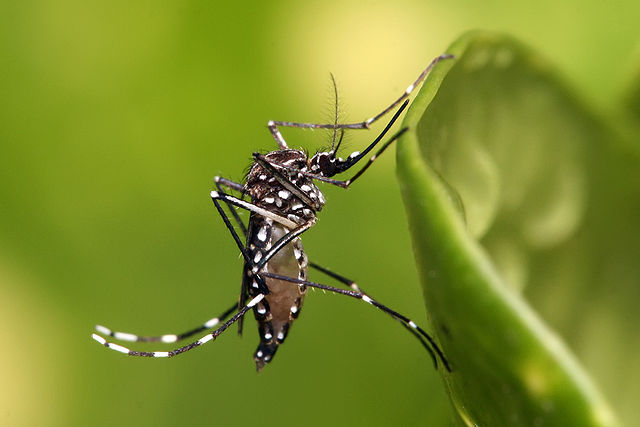
The dengue fever-carrying Aedes aegypti mosquito [photo credit: Wikipedia]

Thursday, September 19, 2013

Muyang

Muyang's activities cover design, development, fabrication and installation of the machinery within feed manufacturing, grain milling, environment protection, food processing, bulk solids handling and storage, steel structure building as well as industrial automation. Click on image to visit company website.

Novus WAS Internship Challenge

Novus International, Inc. is pleased to announce the sponsorship of the Novus World Aquaculture Society (WAS) Internship program. Aquaculture has a bright future, as it represents the fastest growing animal production industry. Novus recognises the need for the industry to attract and educate talented individuals to become future aqua research scientists and nutritionists. This internship program represents an investment by Novus into the future of the aquaculture industry. All eligible candidates are encouraged to apply!

Health problems continue to challenge aquaculture development and expansion. Viral, bacterial, fungal or parasite infections whether from new emerging pathogens or well known diseases, often leave producers with few available treatment or prevention options and significant losses. To be considered for the internship please present a proposal that includes the following:

• Choose a model disease and suggest an experiment aimed at testing a novel possible preventive or treatment solution.

• Provide background literature review on the pathogen, pathogenesis, epidemiology and/or host pathogen interactions etc. as appropriate to support experimental designs and hypotheses.
Proposal to be submitted by October 30, 2013 describing an innovative testable proposal in the area described above. Proposals should be limited to two to three typewritten pages plus references. A one-page CV of the candidate should be attached to the proposal. Applicant must be enrolled in a University MSc or PhD program at the time of application.

 
The selection of the Novus intern will be announced at Asian-Pacific Aquaculture 2013 in Ho Chi Minh City, Vietnam. Following the selection, the four-week internship will be scheduled from June to August, 2014. The intern will work with The Novus Aquaculture Research team on a current project being carried out at the Novus Aqua Research Center in Vietnam. Vietnam is the third largest aquaculture-producing country in the world. Our Novus Aqua Research Center is integrally connected to the aqua industry and will allow the intern to learn about and experience aquaculture in Vietnam through interactions with the Novus research and operations teams.

The award will include:
• Travel to and from Ho Chi Minh City, Vietnam 
• Lodging in a university student dormitory in Vietnam during the internship 
• US$1,000 to help with living expenses in Vietnam
 
Submit proposals by email to Lorraine Magney at Novus: Lorraine.magney@novusint.com


Ho Chi Minh City's Downtown at night
Ho Chi Minh City's Downtown at night (Photo credit: Wikipedia)


Enhanced by Zemanta

Event: Latin American & Caribbean Aquaculture LAQUA 2013

The Latin American & Caribbean Chapter of the WAS presents a new event - LAQUA - at the Hotel Sonesta, Villavicencio, Colombia from 8th - 11th October 2013. 

Organised in conjuntion with the congreso n Native Fishes, LAQUA will cover all aspects of South American Aquaculture. The Local Tilapia producers association is also organising a 3 day forum for their members in Villavicencio for three days.

The Conference will see a flood of fish farmers, entrepreneurs and experts of Latin American and world aquaculture. The event will allow participants to share scientific advances, latest technologies, research results as well as obtain an overview of the challenges facing Latin American aquaculture. 

For more information on the exhibition and sponsorship contact: mario@marevent.com


English: Political map of South America
English: Political map of South America (Photo credit: Wikipedia)


Enhanced by Zemanta

19/09/2013: Combating illegal fishing in Ghana; ornamental fish cultivation in Thailand; shrimp pathologist to be honored at GOAL 2013

A new body to combat illegal fishing activities has been set up in the Greater Accra region of Ghana, West Africa. 

The new body will control, monitor and provide surveillance of every fishing operation within Ghana’s fishery waters. 

The move comes after Nayon Bilijo, minister of Fisheries and Aquaculture Development, pointed out that Ghana as well as other countries in the West-Central Gulf area, have been targeted by local and foreign fishing groups and vessels, consequently destroying indigenous fish stocks and putting local communities in a position of poverty and vulnerability.
Read more...

According to Indonesian news agency ANTARA, Thailand is keen to learn marine ornamental fish cultivation from Indonesia.

Suseno Sukoyono, head of the human resources development agency at the Ministry of Marine Affairs and Fisheries, said several of Thailand's fisheries research delegations recently visited Indonesia in the hope of learning more about the country's marine ornamental fish farming.

The Global Aquaculture Alliance (GAA) has announced that Dr. Donald Lightner, renowned shrimp pathologist will be presented with a Lifetime Achievement Award at its GOAL 2013 conference which takes place from 7th - 10th October 2013 in Paris, France. 

Dr. Lightner is a shrimp and finfish pathologist at the University of Arizona’s School of Animal and Comparative Biomedical Sciences, USA. Here he runs the Aquaculture Pathology Diagnostic Laboratory, a reference laboratory for shrimp diseases.


English: Location of Greater Accra region in Ghana
English: Location of Greater Accra region in Ghana (Photo credit: Wikipedia)

Enhanced by Zemanta

Wednesday, September 18, 2013

18/9/13: Illegal mud crabs; Spanish fish strategy; Meeting the challenges of 2050

A Brisbane restaurant was fined AU$17,000 after authorities seized 100 illegal crabs from its kitchen. Under Queensland law only male mud crabs over a certain weight can be caught, and it is suspected that these crabs were obtained on the black market. All but one of the crabs were eventually released back into Brisbane River.

Spain’s Secretariat General of Fisheries plans to hold a series of consultations to decide on its fisheries and aquaculture strategy for the rest of the decade. The meetings will take place in September and October and will include representatives from the aquaculture, fishery and processing sectors. The strategy will be unveiled on November 7 at the Third Congress of Fishery Product Quality.
Read more...

Engineering and Technology magazine has fingered aquaculture as the likely solution to meet the protein demands of 2050. Contemporary problems well-known to regular readers like pollution caused by densely packed farms and fish-to-fish feeding can be overcome with plant-based solutions and advances in fish genetics.
 
Conservation efforts for New Hampshire salmon will come to an end, as the US federal government withdraws its funding for a project to restore Atlantic salmon to the Merrimack River. The 30-year programme has seen little success in recent years, and the latest round of budget cuts saw salmon get the axe.
Enhanced by Zemanta
English: Brisbane River downstream from Wivenh...
English: Brisbane River downstream from Wivenhoe Dam when the flood gates had been opened for all 5 radial spillway gates. (Photo credit: Wikipedia)

Tuesday, September 17, 2013

17/09/2013: Fiji's fisheries laws; Young's funky fish; Hong Kong bans shark fins

Fiji is reviewing its fisheries laws. 

Currently, there are two new decrees: the Offshore Fisheries Management Decree, which was officially passed in January 2013, and the Aquaculture Decree, which is expected to be promulgated by the beginning of 2014.

A third decree— the Inshore Fisheries Management Decree—has been drafted but is still being reviewed and is subject to further consultation with stakeholders. The objective of all three decrees is to conserve, manage and develop Fiji’s fisheries to ensure for the benefit of the people.

British seafood producer and distributor, Young's Seafood recently launched its new Funky Fish Kitchen brand, which will provide 11 chilled fish products to British supermarket chain Asda.
The range is being launched as part of the company's campaign to inspire more consumers to eat fish at least two times a week.

"The Funky Fish Kitchen brings a new sense of fun to fish and seafood. We want these innovative fish-with-a-twist products to be meal occasion inspirations; we know that more lunch occasions could include seafood", said Marina Richardson, marketing controller at Young's.

Conservation groups have praised the Hong Kong government decision to stop serving shark fin and bluefin tuna at official functions.

According to the World Wildlife Fund (WWF), demand for the fins and other shark-related products has led to some shark species falling in numbers by 60-70%.

"After almost a decade of advocacy in the form of petitions, protest marches, letter writing and media campaigns, the Hong Kong government has finally seen fit to do the right thing - for which we applaud them," Alex Hofford, executive director of Hong Kong-based marine conservation group MyOcean told French based news agency, AFP.
Read more... 


Chinese cuisine-Shark fin soup
Chinese cuisine-Shark fin soup (Photo credit: Wikipedia)
Enhanced by Zemanta

Liptosa

Lípidos Toledo S.A. is made up of a group of professionals and experts in Animal Nutrition, Animal Production and the Manufacture of Feed who are renowned for both their professionalism and their great dedication. It offers clients constant advice regarding feed formulation, animal health, feed manufacture, etc. Click on image to visit company website.

Event: Seagriculture - 2nd International Seaweed Conference

Organised by DLG BeneluxWageningen University and Maritime Campus Netherlands, the 2nd International Seaweed Conference, will take place in Den Helder/Texel, the Netherlands from 25 - 26 September 2013.

At this international conference, science will meet practice by presenting visions & trends in the field of starting materials, cultivation and harvesting, biofiltering and waste streams, market chain development and biorefinery will be discussed, posters will be presented, technical visits to several aquaculture hotspots in the North Sea will be made, and workshops can be followed. 

The conference also offers the opportunity to: 
-  Position your brand and business 
- Get direct and exclusive access to a group of targeted decision makers and investors 
-  Create new partnerships and alliances
- Share knowledge and know-how with your target group
- Benefit from unrivalled lead generation and profiling at this event.

Don't miss your chance to gain insights into the technological developments, the economic outlook and the international developments in the field of seaweed!

TomCorser Seaweed 2
 Seaweed  (Photo credit: Wikipedia)


Enhanced by Zemanta

Monday, September 16, 2013

First Aquaculture Learning Centre from Aquaculture without Frontiers

Roy Palmer, executive director of Aquaculture without Frontiers (AwF) writes for International Aquafeed on the agreement to build its first Aquaculture Learning Centre.

I have had a heavy travelling period which will not end till near the end of December. Sometimes it is difficult to find the time and place to catch up on work. I am writing this blog sitting in a hotel room in Rio de Janeiro. There are three  beds in the room and no desk so I am having to balance the computer with the wires stretched to their maximum from the awkwardly placed electric point between the beds. Oh the joys of travelling!

Time has been flying away and we have been working very hard behind the scenes at AwF of recent date without too much to show for our efforts. Frustrating times…. but all par for the business that we are in. You have spells like this then it all changes!

I arrived in Rio after having spent a very interesting week in Mexico. We had been discussing the establishment of our first Aquaculture Learning Centre (ALC) and it all seemed to be coming together well. We had on other occasions got this close but it had not come to fruition for one reason or another so you are never quite sure.

Good news. We were able to meet some of the decision makers early in the week and by the time we arrived in Tampico on Thursday everyone was ready to sign the agreement. Very excited about the possibilities. 

Here is the media release which says it all:

Aquaculture without Frontiers (AwF) is pleased to announce that we have signed a Cooperation Agreement with the Universidad Tecnológica Del Mar De Tamaulipas Bicentenario (UTMarT) based at La Pesca, Soto la Marina, Tamaulipas, México.

The UTMarT currently offers Technical, Bachelor and Graduate programs in aquaculture and is building a new centre in Tampico. The target of this agreement is to jointly develop food security and personnel training in the International Center for Innovation and Technology Transfer for Aquaculture (CIITTA), which will be AwF’s first Aquaculture Learning Centre (ALC). 

Roy Palmer, executive director, AwF, visiting Tampico during his Mexican business trip said, “AwF is very keen to build a strong relationship with UTMarT and be involved in capacity building, engaging in projects and working with students and establishing a firm base within Mexico. There are 130 million people in Mexico, and of those approximately 30-35 million people are considered to be in extreme poverty. We hope to make a difference in assisting with the growth of aquaculture to assist the alleviation of both poverty and hunger and we see this new partnership as a major step in this direction.” 

Dr Guadalupe Acosta Villarreal, chancellor of UTMarT, said, “This agreement will bring many benefits to the UTMarT and its students in the long term. We anticipate short interchange programs, visiting professors, joint research and projects, participation in international training programs and exchange of experience between different members and specialists of AwF around the world. This agreement fulfills the university’s goals of social awareness and extension which are part of its mission.

At the special event in Tampico, the State Ministry of Education was represented by Dr Diódoro Guerra Rodríguez, and special witnesses for the agreements included Juan Báez Rodríguez representing the Farmer Unions of Tamaulipas, the Mayor Elect of Soto La Marina, Tamaulipas municipality where the UTMarT is located and Jorge Velez, De Camaron Tambien. CONAPESCA; representatives of the state ministries of education and health were present as well.

At the end of the event, which was attended by approximately one hundred people, Roy Palmer gave a presentation about the programmes managed by AwF to the signees, UTMarT students and media. From the comments made by the audience, the potential of the agreement will be extremely motivating for future development for Mexico, the state, the university and the industry, all of whom highlighted commitment. The group then toured the new site for the CIITTA/AwF ALC.

 
We have already started talking about what will be our priorities and aiming to get some AwF volunteers engaged October onwards and to start off the programme. 

The new site is very large, has very large volumes of fresh water available and will enable us to engage in many fronts.

Looking forward to keeping you all involved in the progress that is made in Mexico and in AwF into the future.

Roy writes a regular column on AwF for International Aquafeed magazine. You can browse past issues here.
Enhanced by Zemanta

Scotland to host European Aquaculture 2016

Aquaculture Europe 2016 will take place in Edinburgh, Scotland.

AE2016 will feature a scientific conference, an international trade event, special sessions for aquaculture producers and satellite workshops and events.

The EAS 2012-2014 President, Kjell Maroni expressed the satisfaction of the board of directors, with “a very strong proposal that mixed well the attributes of Edinburgh, the status and potential of aquaculture and blue biotechnology in Scotland and the strong support of the Scottish Government for this event”.

He also commented that bids for AE events organised by EAS come from members that mobilise the main stakeholders in that country to host it. “This is the first Aquaculture Europe event ever to take place in the UK and in Scotland in particular and we are very happy with the proposed theme on blue biotechnology, coming ten years after a very successful AE event in Barcelona on the same theme. Our partners in Scotland will be able to mobilise the sector there and beyond and we are sure that AE2016 will be very well attended – both for its content and for its location”.

Scotland’s Minister for Environment and Climate Change, Paul Wheelhouse added “Scotland is world renowned for high quality and healthy farmed fish and shellfish products – and highly recognised for best practice in aquaculture, and our innovation and development of new technologies.”

“The Scottish Government fully supports the sustainable growth of the sector with due regard to the marine environment – and I am delighted that Scotland will be able to welcome the European Aquaculture Society (EAS) Conference and Trade Show to Edinburgh in 2016.”
Aquaculture Europe 2016 will take place at the Edinburgh International Conference Centre (EICC) at the end of September.


Aquaculture Europe 2016

Enhanced by Zemanta

Event: 13th Aquaculture feed short course

The Aquafeed Platform AMERICAS 13th Program on Trends and Markets in Aquaculture Feed Ingredients, Nutrition, Formulation and Optimized Feed Production and Quality Management
short course will take place in Panama City, Panama, on December 5-6, 2013.

Purely focused on aquafeed, the two-day conference will cover market trends, practical considerations in feed formulation, manufacturing technology and three sessions on extrusion.

The event has attracted a host of international speakers from leading aquafeed companies including Francisco Gomes, Novus, Will Henry, Extru-Tech, Paul McKeithan, Buhler, Jospeth  Barbi, ESE and Eric de Muylder, CrevTec and International Aquafeed editorial panel.
More information...

Deutsch: Flockenfutter für alle Zierfische Deu...
Deutsch: Flockenfutter für alle Zierfische Deutsch: Fish feed flakes for all ornamental fish (Photo credit: Wikipedia)

Enhanced by Zemanta

16/09/13: Scallops in aquafeeds; petrol spill kills fish at Marshall Islands fish farm

Did you know that almost half of scallop parts never makes it to land?

Fishermen usually shuck their catch at sea, meaning that the shell, roe and viscera are discarded overboard.

Scientists at the University of Rhode Island, USA have been exploring ways to turn these by products into marketable commodities.

One option is using the viscera in hydrolysate form in aquafeeds to enhance flavour and stimulate growth.  Trials on flounder and European sea bass showed that the vsicera performed well in terms of weight gain and feed consumption.

The next hurdle is to develop scallop viscera as a commercially viable feed ingredient.
Read more...

A ship fuel spill in the Marshall Islands has killed fish at a farm in Majuro.

Despite a clean up opertaion by farm workers the petrol leak killed some fish.

The Marshall Islands Environmental Protection Authority is investigating the spillage but at present it's not known which vessel the fuel came from.

Petrol leaks from ships are common in the Marshall Islands and endanger both wild and farmed fish populations. 
Read more...

Scallops have up to 100 simple eyes
Scallops have up to 100 simple eyes (Photo credit: Wikipedia)
Enhanced by Zemanta

Event: BioMarine - Aquaculture Business Perspectives

Session 1b aquaculture business perspectives 


BioMarine 2013 kicked off with hot topics challenging both the panel and the audience.

Opening the session for Aquaculture Business Perspectives, Steve Armstrong, CEO, Genome Atlantic spoke about the challenges feeding 9.6 billion by 2050.

"This is the equivalent of adding a new Halifax every two days in population terms, we have to produce 60 percent more food than ever before on less land and with less fresh water, so what are the road blocks, what needs to be done and how do we mitigate the risks?"


Mr Armstrong went on ask the panel to focus on five areas:


Key growth

Sustainability

Growth barriers

Balancing supply and demand

Social licence


Ross Butler, senior vice president, Cooke Aquaculture, Saint John's, New Brunswick, Canada spoke about his personal perspective, having grown up in St. John's Newfoundland and started fishing from the age of seven he concluded he has been involved within fishing for many years.

He felt Atlantic Canada had come to an economic cross roads, Butler went on to say, "commercial fishing has declined, there is no longer a single pork processing plant in Atlantic Canada, the majority of dairy farms have closed and agriculture has consolidated and relocated and 1000s of jobs in Atlantic Canada have been lost."


With his business partner Chris, who entered the feed industry in the early 1990s they are confident with their diverse back grounds, they can combine their feed and fishing knowledge to help grow aquaculture in Atlantic Canada.

With fishmeal in feed now often below 20 percent, there is a far greater focus on nutrition in feed. This has been the focus of Salmon feed for years, where huge developments have been made, this also goes for sea bass and sea bream.


"With the right approach to innovation and science which integrates into and enhances a diverse ecosystem we feel sure we can win support for fish farming in the region,” said Butler.

It was felt that the international community will continue to invest in the scientific approach to fish farming.
However, a word of caution was given by Ross Butler, "growth must go hand in hand with an increase in market demand for eating fish globally."


Next to comment was Oyvind Fylling-Jensen, CEO, Nofima, Norway, "Aquaculture and BioMarine is slowly getting its place on the world stage. 23 million tons of sea food is required to stay where we are per capita world wide over the next 20 years. 67 percent of feed is used for fresh water species which represents 58 percent of total aquaculture production."


Of course fish being produced must be palatable to the consumer. This represents massive opportunities for sea aquaculture, we all know fresh water production uses water, as our populations grow fresh clean water is a diminishing resource. Therefore, going forward sea farming is the only sustainable option. Though we still have hurdles to overcome such as climate change and demographic change, to name a few.


Patrick Lavens, business development & innovations director, INVE Aquaculture, Belgium suggested that we needed further integration in aquaculture, more vertically operated business where feed mills to hatcheries to fish farms are more seamless.

He argued there was a need to keep expertise across all sectors in one vertically integrated model where control, vets, technologists, farmers, nutritionists etc are all in place globally.

Patrick went on further to explain that combining species together fish and seaweed and mussel would meet the challenges of improving the Eco system within which we intend to farm. He urged everyone to form stronger alliances with all groups, biotech, chemical companies with farms and health all with the aim to improve a sustainable growth.


Lavens went on to say "We should look at combining aquaculture with oil sites and energy sites whilst at the same time focusing on the existing species we know most about".


Lavens suggested that he felt Asia will remain on top of global aquaculture production and that our focus should be on more stable outputs. Looking for solutions for Early mortality syndrome EMS in shrimp which is still a big problem in Asia and globally.

With effective management, better bio security and improvements in prophylactic treatments we need to focus on reducing the impact on the environment and with integration and consolidation there is a sustainable way forward.


Thad Simons president CEO Novus, USA, the last in the panel to speak started of by congratulating BioMarine for the sheer diversity of delegates.


Thad went on to explain that Novus produce nutritional supplements in the animal feed industry and they fully understand the opportunities and challenges ahead of them. Having grown their business within the poultry industry Thad spoke about the many countries that have modernised their feed industries including dairy, beef and pork and even pet food and human nutrition.


Thad finalised his opening statement by saying, "One of the most significant challenge for growth in aquaculture is that of social acceptance of aquaculture, the challenge going forward is, how do we make people understand the environmental issues, health issues, protein issues and sustainability issues.


"Novus is dedicated to researching feeding solutions, as we move to a vegetation diet not dissimilar to poultry feed, which we are historically used, we find ourselves working closely with the developing industry as it develops. And we have to earn our social licence."


In the issue of earning social licence, Ross Butler raised the requirement for a globally accepted third party certification and third party audit system. There needs to be legislation on how these are monitored and measured with the goal always in improving our systems. With salmon, only a small segment of the world can afford these products and on their own as a species, are not going to solve wold hunger. Also, it was strongly suggested that we need to look at other environmental issues affecting the oceans, such as waste reduction, water use, effluent reduction, plastics all of which leave a footprint on the ocean.


Olvynd, followed this up by talking about the challenges on finances in Aquaculture, and where in the industrialised world we are only focused on a few species this is not the case in developing worlds. “Here there is a different approach, they have a lack of knowledge, lack of infrastructure and lack of training, we must first answer three basic questions. 1) What do you farm, 2) where do you farm and 3) how do you farm. It is our job to bring technology to the developing countries, as you cannot just burn forests and dig ponds as this is not healthy.”


Patrick Lavens expanded these thoughts by adding that there is a real challenge of reducing costs, and involves integration which allows you to work with expertise; in disease management, breeding technology, functional diets and environmental control, however, will there still be room for the small players. Patrick thinks yes, he went on to explain that smaller players can join co-operatives and still benefit from expertise.

Thad Simons added further still and raised the concern of talent in aquaculture, which he referred to as ‘talent sustainability’. Thad said, “Agriculture in general is not seen as an attractive job to work in. I have seen this all over the world, everyone country has the same dilemma trying to attract new staff into aquaculture”.

Further elaborating “We need to build a value chain, where we can show young people that there are many exciting careers in aquaculture” In addition to this Thad highlighted the need to improve the link between the consumer, farmer, nutritionist and back to the consumer. A major obstacle to growth was the consumer and Thad rightly pointed out that they were not represented at BioMarine.

Furthermore, the industry needs to involve its media friends more to further spread the word and enlighten the public to the positive things happening in aquaculture.

The industry has to be more efficient and embrace working with small companies. It was felt that two areas for international cooperation are in conferences and sharing research, problems of course need solutions for everyone to move forward with science.

And lastly Thad spoke about the real need for local and national governments to support the industry. Implementing globally accepted legislations and regulations will drive productivity.  There are huge marketing opportunities globally, where everyone can develop markets together with huge opportunities in Africa and the Far East.

In conclusion everyone agreed that it was critically important for the industry that there was a better alignment with government, and that  the government was operating from a strong regulatory position as opposed to the current unpredictability and shifting focus.

The government needs to see objective results and businesses need to see new data and information and work together.

Thad Simons, CEO, Novus Inc, closed the session with his final thoughts:
How do we use the professional management we have learnt over the years to improve and mitigate risks
We must have a strong focus on feed management, training and husbandry.
We must respond rapidly and work together when problems arise.


Map highlighting Atlantic Canada
Map highlighting Atlantic Canada (Photo credit: Wikipedia)

Enhanced by Zemanta